
THE SHORT ANSWER
The best recovery routine is a sequence, not a single act: rehydrate and refuel right after the whistle, use compression and cold in the first hours to manage soreness, prioritize sleep that night, and use light movement and heat over the next two days as soreness peaks. Consistency across the full 72-hour window beats any one 'hack.'
UNDERSTAND WHAT YOU'RE RECOVERING FROM
Recovery is a process with a predictable timeline.
DOMS typically begins 8–24 hours after intense or unfamiliar exercise and peaks at 48–72 hours before gradually resolving. [Source: Enhancing Skeletal Muscle Rehabilitation (DOMS review), PMC (2023)]
Muscle soreness doesn't hit hardest right after the match — it builds and peaks a day or two later. That's why recovery isn't something you 'finish' in the parking lot; it's a routine you run across three days.
THE FIRST 2 HOURS: REFUEL AND MANAGE SORENESS
Start with hydration and a mix of carbohydrate and protein to begin replenishing energy and supporting muscle repair. This is also the window where cold and compression are most effective.
Systematic review evidence indicates cold therapy is most effective when applied immediately post-exercise, with cold-water immersion at 10–15°C for 10–15 minutes among the most consistently beneficial protocols. [Source: Hot-Cold Compression Therapy and DOMS: A Systematic Review, Int'l Journal of Medical Science and Health Research (2026)]
A meta-analysis of 12 studies found compression garments had a moderate effect in reducing the severity of delayed-onset muscle soreness (DOMS) and aided recovery of muscle strength and power at 24–72 hours post-exercise. [Source: Compression garments and recovery from exercise-induced muscle damage: a meta-analysis, BJSM / PubMed (2013)]
Cold helps blunt the acute soreness response, and compression supports circulation to clear metabolic byproducts from tired legs.
THAT NIGHT: SLEEP IS THE REAL RECOVERY TOOL
Nothing you buy beats sleep. It's when the bulk of tissue repair and adaptation happens. Aim to protect a full night after matches — cut screens, cool the room, and treat it as part of training. Compression on travel days home can help keep legs from stiffening on long journeys.
DAYS 1–2: MOVE THROUGH THE PEAK
As soreness peaks, gentle movement — a walk, easy bike, mobility work — promotes blood flow better than total stillness. Heat can ease stiffness in tight areas at this stage. Keep protein and hydration up. This active-recovery approach helps you feel loose faster than waiting it out passively.
YOUR SIMPLE ROUTINE
|
When |
Do this |
|
0–2 hrs post-match |
Hydrate + carbs/protein; cold + compression |
|
That night |
Prioritize full sleep |
|
Travel home |
Compression to reduce stiffening |
|
Day 1–2 (soreness peak) |
Light movement, heat on tight areas, keep fueling |
|
Throughout |
Consistency over any single hack |
FREQUENTLY ASKED QUESTIONS
Q: What should I do immediately after a soccer match?
A: Rehydrate and eat a mix of carbs and protein, then use cold and compression in the first couple of hours to manage soreness while it's most effective.
Q: How long does full recovery take after a match?
A: Muscle soreness typically peaks 48–72 hours after intense play. Full recovery depends on match intensity, fitness, sleep, and nutrition across that window.
Q: Is sleep really that important for recovery?
A: Yes — sleep is when most tissue repair and adaptation occur. No supplement or device compensates for consistently poor sleep after matches.
Q: Should I rest completely or move the day after?
A: Light active recovery — walking, easy cycling, mobility — generally helps blood flow and soreness more than complete rest, as long as it's gentle.
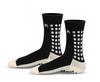
MediCaptain — trusted by 100,000+ players. The only grip sock brand with built-in ankle cushioning and metatarsal ShockPad protection. Shop the collection at themedicaptain.com