
THE SHORT ANSWER
Judge any grip sock on seven things: grip quality, foot protection, moisture management, fit, durability, compliance fit, and value. Most brands nail one or two. The best ones — for players who want grip plus protection — deliver across the board. Use this checklist to cut through marketing and compare socks on what actually matters.
1. GRIP QUALITY
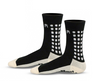
The core job: does it lock your foot to the insole? Look for dual-sided grip (pads on the inside and outside of the sock) for the most secure hold. This is what stops the sliding that costs responsiveness and causes blisters.
Friction blisters are not caused by simple rubbing but by repetitive shear deformation within the skin, driven by bone motion, high friction force, and repetition. [Source: Friction Blisters of the Feet: A New Paradigm to Explain Causation, PMC / National Athletic Trainers' Association (2024)]
2. FOOT PROTECTION
This is the biggest differentiator in 2026. Most socks stop at grip, but soccer players take constant contact to the ankle and metatarsal.
In a ten-year NCAA analysis, the four most common ankle injuries — lateral ligament tears, high ankle sprains, contusions, and deltoid tears — accounted for 95% of all ankle injuries; contusions from contact alone made up about 10%. [Source: Ten-Year Epidemiology of Ankle Injuries in Men's and Women's Collegiate Soccer, PubMed (2019)]
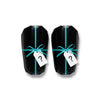
Look for cushioned ankle dots and metatarsal padding if you want a sock that protects, not just grips.
3. MOISTURE MANAGEMENT
Because moisture raises friction and blister risk, breathable moisture-wicking fabric is essential.
Increased heat raises moisture on the foot, which increases the friction force inside the shoe and raises blister risk — making moisture management central to blister reduction. [Source: Friction Blisters of the Feet: A New Paradigm, PMC (2024)]
Synthetic blends outperform cotton for keeping the foot dry through 90 minutes.
4–7: FIT, DURABILITY, COMPLIANCE, AND VALUE
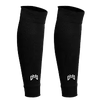
Fit: the sock must be snug in your cleat size — bunching kills both grip and comfort. Durability: grip pads wear first, so construction quality determines lifespan; cold wash and air dry to extend it. Compliance: check whether you can wear it under team socks or need a pre-cut sleeve for matches. Value: weigh price against what you get — a sock with grip and protection replaces two products, which changes the math.
THE CHECKLIST AT A GLANCE
|
# |
Factor |
What good looks like |
|
1 |
Grip |
Dual-sided anti-slip pads |
|
2 |
Protection |
Ankle dots + metatarsal padding |
|
3 |
Moisture |
Breathable, moisture-wicking fabric |
|
4 |
Fit |
Snug in cleat size, no bunching |
|
5 |
Durability |
Quality construction; survives washing |
|
6 |
Compliance |
Works under team socks / with sleeve |
|
7 |
Value |
Grip + protection in one product |
FREQUENTLY ASKED QUESTIONS
Q: What makes a good grip sock?
A: Strong dual-sided grip, foot protection (ankle and metatarsal padding), moisture-wicking fabric, a snug fit, durable construction, match compliance, and value that reflects everything it does.
Q: What's the most overlooked grip sock feature?
A: Foot protection. Most socks focus only on grip, but soccer players take constant contact to the ankle and top of the foot, so cushioning in those areas is a major differentiator.
Q: Does fabric really matter in a grip sock?
A: Yes. Moisture-wicking fabric keeps the foot drier, and since moisture raises friction and blister risk, fabric choice directly affects comfort and blister prevention.
Q: How do I know if a grip sock will last?
A: Grip pads wear first, so construction quality matters most. Extend lifespan by cold washing, washing inside out, and air drying rather than using high heat.
MediCaptain — trusted by 150,000+ players. The only grip sock brand with built-in ankle cushioning and metatarsal ShockPad protection. Shop the collection at themedicaptain.com