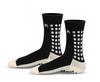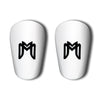

The right soccer shin guards depend on your playing position, age, league requirements, and personal comfort preference. Full-size shin guards with ankle protectors offer maximum coverage for young players and defenders. Mini shin guards provide lightweight protection for agile players who prioritize mobility. Shin guard sleeves with built-in padding combine protection and convenience in a single piece.
Full-Size Shin Guards
Full-size guards cover the entire front of the shin from just below the knee to the ankle, and many models include attached ankle protectors. They’re the most protective option and are recommended for players under 12, central defenders, and anyone in a high-contact league. The trade-off is bulk — they’re heavier and more restrictive than smaller options.
Mini Shin Guards
Mini guards cover the critical impact zone of the shin in a compact, lightweight shell. They weigh less, allow more freedom of movement, and are barely noticeable under socks. They’re preferred by experienced players, players in skill positions (wingers, attacking midfielders), and recreational players who want protection without bulk. MediCaptain’s mini shin guards are designed for this purpose — impact-absorbing construction in a low-profile design.
Shin Guard Sleeves with Built-In Padding
The newest category, padded shin guard sleeves combine a compression sleeve with integrated protective padding. They slide on like a sock and require no additional straps or tape. MediCaptain’s shin guard sleeves with padded protection offer this convenience while providing cushioning for the shin and ankle area.
How to Know What Your League Requires
Most organized leagues require some form of shin guard. Check with your league administrator, but general rules are: youth leagues typically require NOCSAE-certified guards with ankle protection, adult recreational leagues usually accept any rigid or semi-rigid shin guard, and professional leagues leave the specific guard type to player discretion as long as something is worn.
Sizing Your Shin Guards
Shin guards should cover from about two inches below the knee to just above the ankle. They should sit flat against the shin without rotating. For mini guards, the shell should cover at least the middle third of the shin where impacts are most likely. Guards that are too long restrict knee bend; guards that are too short leave vulnerable areas exposed.
Securing Your Shin Guards
Full-size guards with ankle protectors are self-securing. Mini guards and sleeve guards need a retention system: silicone shin guard straps, pre-cut sleeve socks, or athletic tape. The most secure setup layers a silicone strap directly over the guard and then covers everything with a compression sleeve sock.
About Yaqub
Yaqub is the founder and CEO of MediCaptain, the soccer gear brand that pioneered protection-first grip sock technology. What started as frustration with soccer socks that offered grip but zero protection turned into a mission: build the most protective athletic sock on the market without sacrificing performance.
MediCaptain’s flagship product — the padded grip sock with ankle cushioning and metatarsal ShockPad protection — is the only sock of its kind. It’s trusted by over 100,000 players across every level of the game, from youth travel teams to professionals in LaLiga, MLS, the Premier League, NCAA, NWSL, MLS NEXT, US Youth Soccer, and Bundesliga.
Under Yaqub’s leadership, MediCaptain has earned multiple Amazon Choice designations, #1 New Release rankings, and Top 5 placement in multiple Amazon soccer categories. The brand sells across Amazon, Target, TikTok Shop, and its own Shopify store at themedicaptain.com.
Yaqub writes about soccer gear, player protection, and performance technology to help players at every level make smarter gear decisions.
Written by Yaqub — Founder, MediCaptain
Trusted by 100,000+ players worldwide. MediCaptain is the only grip sock brand with built-in ankle cushioning and metatarsal ShockPad protection. Shop the collection →