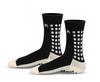

THE SHORT ANSWER
The evidence is moderately positive: compression garments have been shown to reduce the severity of delayed-onset muscle soreness (DOMS) and help preserve muscle strength and power in the 24–72 hours after hard exercise. Compression won't replace sleep, nutrition, or smart training, but as a recovery add-on it has real, measurable support.
WHAT THE RESEARCH ACTUALLY FOUND
The strongest evidence comes from pooled analysis across multiple studies.
A meta-analysis of 12 studies found compression garments had a moderate effect in reducing the severity of delayed-onset muscle soreness (DOMS) and aided recovery of muscle strength and power at 24–72 hours post-exercise. [Source: Compression garments and recovery from exercise-induced muscle damage: a meta-analysis, BJSM / PubMed (2013)]
In practical terms, players using compression tend to report less soreness and recover strength and power faster than those relying on passive rest alone.
Reviews of compression therapy report reduced perceived muscle soreness and better preservation of muscle strength and power in the 24–72 hours after intense exercise. [Source: Compression garments and recovery: meta-analysis, PubMed (2013); systematic reviews (2025)]
WHY IT WORKS
Compression applies graduated external pressure that supports venous return — helping move fluid and metabolic byproducts out of fatigued muscle and bringing fresh circulation in. After a 90-minute match, when your legs feel like concrete, that circulatory support is what's behind the 'fresher legs' players describe. It's most effective applied during the recovery window after exercise.
UNDERSTANDING THE SORENESS TIMELINE
To use recovery tools well, know the DOMS curve.
DOMS typically begins 8–24 hours after intense or unfamiliar exercise and peaks at 48–72 hours before gradually resolving. [Source: Enhancing Skeletal Muscle Rehabilitation (DOMS review), PMC (2023)]
Soreness after a hard match or unfamiliar session doesn't peak immediately — it builds and hits hardest a day or two later. That's why recovery interventions in the first hours and over the following days matter: you're managing a process that unfolds over 72 hours, not a single moment.
HOW TO USE COMPRESSION REALISTICALLY
Set expectations correctly. Compression is a supportive tool, not a miracle. Use it in the recovery window after matches and hard sessions, and on travel days to keep legs from stiffening. Combine it with the fundamentals that do the heavy lifting — sleep, hydration, protein, and progressive training. The players who benefit most treat compression as one consistent piece of a broader recovery routine.
FREQUENTLY ASKED QUESTIONS
Q: Does compression gear reduce muscle soreness?
A: Meta-analysis evidence shows a moderate reduction in DOMS severity and better recovery of strength and power in the 24–72 hours after hard exercise. It's a supportive tool, not a cure-all.
Q: When should I use compression for recovery?
A: It's most effective in the recovery window after matches and hard sessions, and useful on travel days. Consistent use as part of a broader routine matters more than one-off sessions.
Q: Is compression better than rest?
A: Studies suggest athletes using compression often recover strength and report less soreness than those using passive rest alone. It complements rest rather than replacing it.
Q: How long does muscle soreness last after soccer?
A: DOMS typically begins 8–24 hours after intense play and peaks around 48–72 hours before easing. Recovery tools help manage that window.
MediCaptain — trusted by 100,000+ players. The only grip sock brand with built-in ankle cushioning and metatarsal ShockPad protection. Shop the collection at themedicaptain.com