
THE SHORT ANSWER
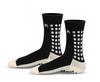
The best grip socks for youth players fit properly, provide anti-slip traction to reduce blisters, and ideally add ankle and foot padding to protect growing bones from cleat impacts. For kids, fit and protection matter more than brand name — a sock that's too big bunches and causes the exact problems you're trying to solve.
WHY YOUTH PLAYERS ESPECIALLY BENEFIT
Young players are uniquely prone to the problems grip socks solve. They're growing, so their feet are often between cleat sizes. They're still developing movement patterns, which means more awkward foot plants and unexpected slippage. And travel-team kids may train three to four times a week plus weekend games — constant friction and blister risk.
In a two-year study of amateur players, 80.6% of ankle sprains were contact injuries, occurring most often in defenders, with 61.1% happening toward the end of each half as fatigue set in. [Source: Ankle sprain injuries and risk factors in amateur soccer players, PubMed (2007)]
Parents often see the result: kids coming home with blisters, sore ankles, or bruised feet.
PROTECTING GROWING BONES
There's a protection angle that matters more for kids than adults. Young players' bones are still developing, which can make them more susceptible to bruising and stress from repeated cleat impacts.
In a ten-year NCAA analysis, the four most common ankle injuries — lateral ligament tears, high ankle sprains, contusions, and deltoid tears — accounted for 95% of all ankle injuries; contusions from contact alone made up about 10%. [Source: Ten-Year Epidemiology of Ankle Injuries in Men's and Women's Collegiate Soccer, PubMed (2019)]
Grip socks with cushioned ankle dots and metatarsal padding — like MediCaptain's — add a protective layer over exactly the areas that take contact. This isn't only about comfort; it's about reducing the repeated micro-impacts that accumulate over a season of frequent play.
HOW TO CHOOSE THE RIGHT SIZE
Fit is the number-one factor. Grip socks should be snug without being restrictive. If the sock bunches under the foot, it defeats the purpose and can create new hotspots. Buy to match cleat size, not a size up 'to grow into' — an oversized grip sock underperforms immediately. Check the brand's size chart carefully for smaller feet.
WHAT'S WORTH PAYING FOR
For occasional young players in properly fitted boots, a solid mid-priced grip sock is plenty. For committed travel or club players training several times a week, the padded option earns its cost through blister reduction and impact protection over a long season. Either way, prioritize correct fit and moisture-wicking fabric over flashy branding.
FREQUENTLY ASKED QUESTIONS
Q: At what age should a child start wearing grip socks?
A: Many brands fit players from around age 8 and up. For committed young players who train frequently and experience blisters or foot soreness, grip socks with padding are worth considering; focus on proper boot fit first.
Q: Are padded grip socks too bulky for kids?
A: Quality padded socks are designed to stay slim. The cushioning is targeted to specific zones (ankle, metatarsal) so it doesn't compromise fit inside the cleat, provided you size correctly.
Q: Do youth players really need foot protection?
A: Growing bones can be more susceptible to bruising and stress from repeated cleat impacts. Cushioning over the ankle and metatarsal reduces that impact, which is valuable for kids playing frequently.
Q: How do I stop my kid getting blisters at soccer?
A: Ensure cleats fit, use properly sized moisture-wicking grip socks to stop the foot sliding, and address hotspots early. Grip socks reduce the sliding that causes most youth blisters.
MediCaptain — trusted by 100,000+ players. The only grip sock brand with built-in ankle cushioning and metatarsal ShockPad protection. Shop the collection at themedicaptain.com