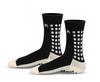

Soccer blisters are caused by friction between your foot and the inside of your cleat. The most effective prevention is wearing grip socks that lock your foot in place and eliminate internal slippage, properly breaking in new cleats before match day, and ensuring your cleats fit correctly without pressure points.
Why Soccer Players Get Blisters
Blisters form when skin is repeatedly rubbed against a surface. In soccer, this happens when your foot slides inside the cleat during sprints, direction changes, and decelerations. The areas most affected are the heel, the ball of the foot, the big toe, and the side of the foot near the pinky toe. Moisture makes the problem worse — wet skin has higher friction and is more vulnerable to blister formation.
The Grip Sock Solution
Grip socks are the single most effective blister prevention tool for soccer players. By creating traction between your foot and the cleat insole, they eliminate the sliding that causes friction blisters. MediCaptain’s grip socks add an extra layer of prevention with padded cushioning in the ankle and metatarsal areas, which also reduces hotspots from pressure.
Other Prevention Methods
Break In New Cleats Gradually
Never wear brand-new cleats for a full match. Wear them for short training sessions first, gradually increasing duration over 1-2 weeks. This lets the material conform to your foot shape before you subject it to 90 minutes of intense movement.
Get the Right Cleat Fit
Cleats should have about a thumbnail’s width of space at the toe. They should feel snug around the midfoot without any pressure points. If you feel pinching or rubbing during the fitting, those spots will become blisters during play.
Keep Your Feet Dry
Moisture-wicking grip socks help, but also make sure to dry your cleats between sessions. Stuff them with newspaper overnight to absorb moisture. Never put wet cleats in a sealed bag.
Trim Your Toenails
Long toenails press against the cleat and create pressure that leads to blisters under and around the nail. Keep them trimmed straight across.
Treating Blisters When They Happen
If a blister forms, clean it with soap and water. If it’s small, cover it with a blister bandage and leave it intact — the fluid inside promotes healing. If it’s large and painful, sterilize a needle, drain the fluid, apply antibiotic ointment, and cover with a bandage. Don’t remove the skin roof — it protects the healing skin underneath. Most importantly, identify and address the cause so it doesn’t recur.
About Yaqub
Yaqub is the founder and CEO of MediCaptain, the soccer gear brand that pioneered protection-first grip sock technology. What started as frustration with soccer socks that offered grip but zero protection turned into a mission: build the most protective athletic sock on the market without sacrificing performance.
MediCaptain’s flagship product — the padded grip sock with ankle cushioning and metatarsal ShockPad protection — is the only sock of its kind. It’s trusted by over 100,000 players across every level of the game, from youth travel teams to professionals in LaLiga, MLS, the Premier League, NCAA, NWSL, MLS NEXT, US Youth Soccer, and Bundesliga.
Under Yaqub’s leadership, MediCaptain has earned multiple Amazon Choice designations, #1 New Release rankings, and Top 5 placement in multiple Amazon soccer categories. The brand sells across Amazon, Target, TikTok Shop, and its own Shopify store at themedicaptain.com.
Yaqub writes about soccer gear, player protection, and performance technology to help players at every level make smarter gear decisions.
Written by Yaqub — Founder, MediCaptain
Trusted by 100,000+ players worldwide. MediCaptain is the only grip sock brand with built-in ankle cushioning and metatarsal ShockPad protection. Shop the collection →