
THE SHORT ANSWER
Injuries cluster late in each half because fatigue degrades coordination, reaction time, and neuromuscular control — the systems that keep you safe during cuts, landings, and challenges. Studies repeatedly find a large share of injuries, especially ankle sprains, occur in the closing minutes. Managing fatigue, conditioning, and substitutions is central to reducing that risk.
THE PATTERN IN THE DATA
This isn't anecdotal — it shows up clearly in injury surveillance.
Nearly half (47%) of ankle sprains in Brazilian professional soccer occurred in the final 15 minutes of each half, and injuries recurred in over 31% of cases. [Source: Ankle Sprains in Brazilian Professional Soccer: 126,357 Match Hours, PMC (2024)]
And it's not limited to the pros. Amateur data show the same clustering.
In a two-year study of amateur players, 80.6% of ankle sprains were contact injuries, occurring most often in defenders, with 61.1% happening toward the end of each half as fatigue set in. [Source: Ankle sprain injuries and risk factors in amateur soccer players, PubMed (2007)]
When most injuries in a study happen toward the end of halves, fatigue is the common thread.
WHY TIRED PLAYERS GET HURT
Fatigue impairs the fast, automatic control your body uses to stabilize joints during dynamic movement. Given that soccer demands a direction change roughly every six seconds, there are thousands of moments per match where split-second neuromuscular control determines whether you plant safely or roll an ankle.
Soccer players change direction on average roughly every six seconds during a match, loading the lower limbs — especially the ankle and foot — repeatedly. [Source: Ankle Sprains in Brazilian Professional Soccer, PMC (2024)]
As that control degrades late in a half, the margin for error shrinks — and awkward landings and mistimed challenges follow.
HOW TO REDUCE LATE-GAME RISK
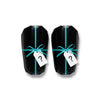
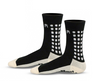
Several levers help. Conditioning is foundational — the fitter you are, the later fatigue sets in. Smart substitution timing keeps tiring players from playing through the highest-risk window. In-game fueling and hydration slow the decline. And because fatigue makes the contact injuries that dominate soccer more likely, wearing your protection consistently matters most exactly when you're tired. Cushioned ankle and foot protection reduces the impact of the contact that a fatigued player is less able to avoid.
THE RECOVERY CONNECTION
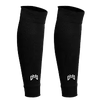
Cumulative fatigue across a congested schedule compounds the problem. A player who hasn't recovered from the last match starts the next one closer to the fatigue threshold. That's why the recovery routine between matches — sleep, refueling, and tools like compression — isn't separate from injury prevention; it's part of it.
FREQUENTLY ASKED QUESTIONS
Q: When are soccer injuries most likely?
A: A large share occur late in each half — studies have found nearly half of ankle sprains happening in the final 15 minutes of each half — driven by fatigue degrading coordination and control.
Q: Why does fatigue cause injuries?
A: Fatigue impairs the fast neuromuscular control that stabilizes joints during cuts, landings, and challenges, shrinking your margin for error during the game's thousands of dynamic movements.
Q: How can I avoid getting injured late in games?
A: Improve conditioning, fuel and hydrate during play, use substitutions wisely, and wear protection consistently — it matters most when you're tired and less able to avoid contact.
Q: Does recovery between matches affect injury risk?
A: Yes. Poor recovery means starting the next match closer to the fatigue threshold, so between-match sleep, nutrition, and recovery tools are part of injury prevention.
MediCaptain — trusted by 100,000+ players. The only grip sock brand with built-in ankle cushioning and metatarsal ShockPad protection. Shop the collection at themedicaptain.com