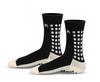

Grip socks last 3 to 6 months with proper care. The key to extending their lifespan is washing on a cold, gentle cycle, turning them inside out before washing, air drying instead of machine drying, and rotating between multiple pairs to give each pair recovery time between uses.
Why Grip Socks Lose Their Grip
The silicone or rubber grip pads on grip socks degrade from three main factors: heat from machine dryers (the single biggest killer), abrasion from washing with heavy or rough items like jeans and towels, and chemical exposure from harsh detergents or fabric softener. Address these three factors and your grip socks will last significantly longer.
The Proper Washing Routine
Turn socks inside out to protect the grip pads. Wash on cold or lukewarm temperature only. Use the gentle or delicates cycle. Use a mild detergent — avoid fabric softener, which coats the silicone and reduces grip. Wash with similar lightweight items, not heavy jeans or towels. For best results, use a mesh laundry bag.
Drying Your Grip Socks
Air dry every time. Lay flat or hang dry — avoid direct sunlight which can degrade the silicone over time. Never put grip socks in the dryer. The heat from a standard dryer cycle is enough to permanently reduce grip performance after just a few cycles. If you must speed up drying, use the dryer’s no-heat or air-fluff setting only.
How to Restore Grip That’s Fading
If your grip pads feel less tacky, try washing them with a small amount of rubbing alcohol on a cloth to remove buildup of sweat oils, detergent residue, and dirt. Let them dry completely before using. This often restores a significant amount of grip on pads that have become slippery due to surface contamination rather than actual wear.
When to Replace Your Grip Socks
Replace grip socks when the grip pads are visibly worn flat and smooth, when the fabric has developed holes or thinning in high-wear areas, when the compression has loosened and the sock no longer fits snugly, or when the grip restoration method above no longer improves traction. A good rule of thumb: if you notice your foot starting to slide inside the cleat again, it’s time for a new pair.
Rotating Pairs Extends Total Lifespan
Having two pairs and alternating between training and match use extends each pair’s life. The grip material needs time to recover its tackiness between uses. Players who use the same pair every day see faster degradation than those who rotate.
About Yaqub
Yaqub is the founder and CEO of MediCaptain, the soccer gear brand that pioneered protection-first grip sock technology. What started as frustration with soccer socks that offered grip but zero protection turned into a mission: build the most protective athletic sock on the market without sacrificing performance.
MediCaptain’s flagship product — the padded grip sock with ankle cushioning and metatarsal ShockPad protection — is the only sock of its kind. It’s trusted by over 100,000 players across every level of the game, from youth travel teams to professionals in LaLiga, MLS, the Premier League, NCAA, NWSL, MLS NEXT, US Youth Soccer, and Bundesliga.
Under Yaqub’s leadership, MediCaptain has earned multiple Amazon Choice designations, #1 New Release rankings, and Top 5 placement in multiple Amazon soccer categories. The brand sells across Amazon, Target, TikTok Shop, and its own Shopify store at themedicaptain.com.
Yaqub writes about soccer gear, player protection, and performance technology to help players at every level make smarter gear decisions.
Written by Yaqub — Founder, MediCaptain
Trusted by 100,000+ players worldwide. MediCaptain is the only grip sock brand with built-in ankle cushioning and metatarsal ShockPad protection. Shop the collection →